
Resources
Search By Topic
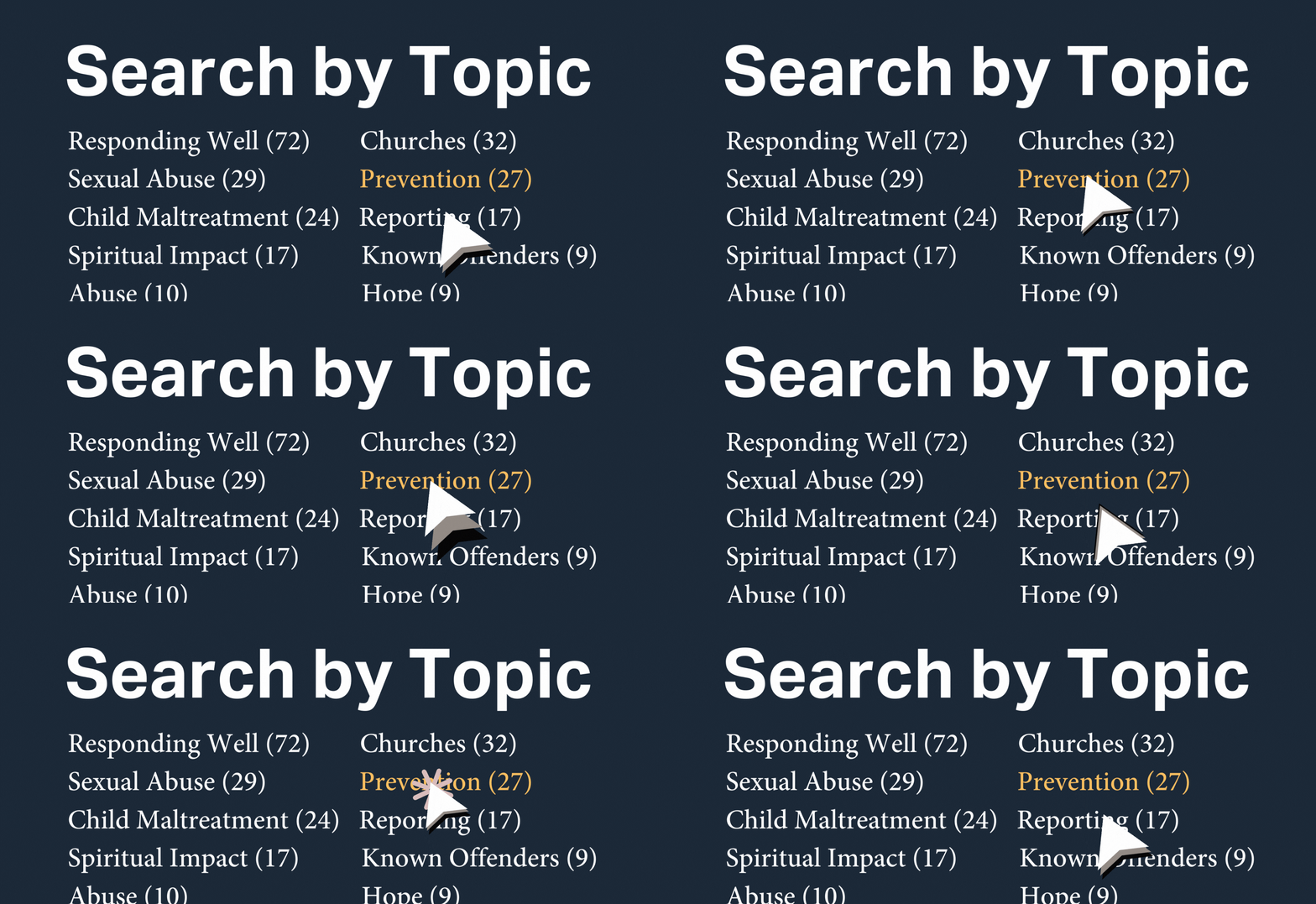
Discover a wealth of free resources on various topics like Responding Well, Prevention, Spiritual Impact, Known Offenders, and more that are available on GRACE's website.
When The Shepherd Becomes The Storm
Confronted with pastoral abuse allegations? Discover biblically grounded, trauma-informed steps for church leaders to prioritize truth, safety, and healing.
Protecting Kids at VBS
Vacation Bible School is often the most high-energy, chaotic, and beautiful week in the life of a children's ministry. But in the thick of planning decorations, games, and snacks, ensuring the safety and protection of the children in your care must be the baseline of your preparation. Offenders look for environments where privacy is easily accessed and chaos masks boundary violations. Here are the top 7 things you need to prepare right now to make your VBS a sanctuary of safety and healing.

Does a Church Abuse Investigation Replace Law Enforcement?
When an allegation of abuse surfaces, church leaders often face immediate confusion. Should you wait for the police to finish before taking action? Does filing a report satisfy your duty to the church body? If civil authorities close a case without filing charges, does that mean the church’s work is done?

What Happens During an Independent Church Abuse Investigation?
During an independent church abuse investigation, investigators establish the scope, collect records, conduct voluntary interviews, evaluate the evidence, examine the institution’s response, and prepare findings and recommendations.

Why a Church Abuse Investigation Must Look Beyond the Alleged Offender
When an allegation of abuse comes to light, leaders naturally focus on the Alleged Offender, gathering facts, weighing conflicting accounts, examining evidence, and ensuring a fair process. That focus is essential for immediate safety and administrative decisions, but stopping there leaves some of the most critical institutional questions unanswered.
6 Ways To Make Sure a Church Abuse Investigation Is Credible
A credible church abuse investigation is structurally independent, aligned with truth, trauma-informed, and grounded in objective evidence evaluation. Investigators must be free to follow relevant evidence, examine institutional causes, coordinate responsibly with civil authorities, and report their findings without institutional control.

Who Should Receive The Final Report After a Church Abuse Investigation?
Report distribution is a foundational structural element of an investigation. Decisions about who receives the report must be established in writing before anyone knows what the investigation will uncover.

Boundaries, Policies, & Safety Recommendations For Youth Group / Student Trips
Unstructured time (such as travel, overnight trips, informal hangouts, lock-ins, etc.) create an increased risk for children and teens because they involve sleeping arrangements, showering and changing, or other vulnerable situations. In this article we will look at basic safety recommendations for student trips.

How Do I Develop A Safeguarding / Safety Team At My Church?
Safeguarding Teams or Safety Teams exist to facilitate the essential prevention and response actions within a church or organization. Developing and investing time and resources into a standing team is an effective way to advance the overall safety of the church or ministry by clarifying policy and responsible actions in prevention and response for all in the community. Below is a simple guide…

Understanding and Responding to the Impacts of Child Sexual Abuse Images Online
CSAIO causes "never-ending" trauma due to digital permanence. Online offending is as serious as contact abuse and indicates pedophilia. Churches must prioritize reporting, accountability, and safety education.

To Silence The Voices of Victims - An Interview with Robert Peters
“To silence the voices of victims and cover up their pain is to dehumanize them and do violence against their souls, often in the name of God”
Expert lawyer Robert Peters has investigated all kinds of cases of abuse in churches. In an interview with ‘Evangelical Focus’, he argues why the “historically passive and superficial approach” in churches must change radically, and offers keys for action.

The Toxic Triangle: Understanding How Systems Enable Abuse
When people ask, “How did this happen?” they’re often searching for a single point of failure. Was it a destructive leader? A non-existent or weak policy? A failure of bystanders to speak up? The best way to approach answering this question is to think in systems, understanding how a set of parts might work together in an interconnected network.

The Gaslight Religion: When Faith is Used to Make You Question Your Reality
The Gaslight Religion uses the language, ritual, and authority of faith not to liberate, but to control. It may not have a formal name or structure. Often, it’s a set of unspoken rules and reactions—a climate of confusion cloaked in sanctity.

Finding A Trauma Therapist
Experiencing abuse and other trauma in the Church creates a deep wound. Each person determines their best path toward incorporating this trauma into their understanding of themselves, the world around them, God, and how all of these connect. For many, the best path includes the use of a professional licensed mental health therapist.

Providing Pastoral Care to Survivors of Child Abuse
While children who are abused are at increased risk of suffering from numerous medical and mental health conditions, we also know from a large and growing body of research that many maltreated children also suffer spiritually.
Shattered Sanctuary: The Many Losses of Church Betrayal
As the Witness/Victim Support Coordinator at GRACE, I encounter this distressing narrative time and again. Abuse is uncovered, yet church leaders opt for silence, shielding the perpetrator. Far too frequently, victims, survivors, and whistleblowers are unjustly shamed and vilified for bravely speaking out and seeking justice.